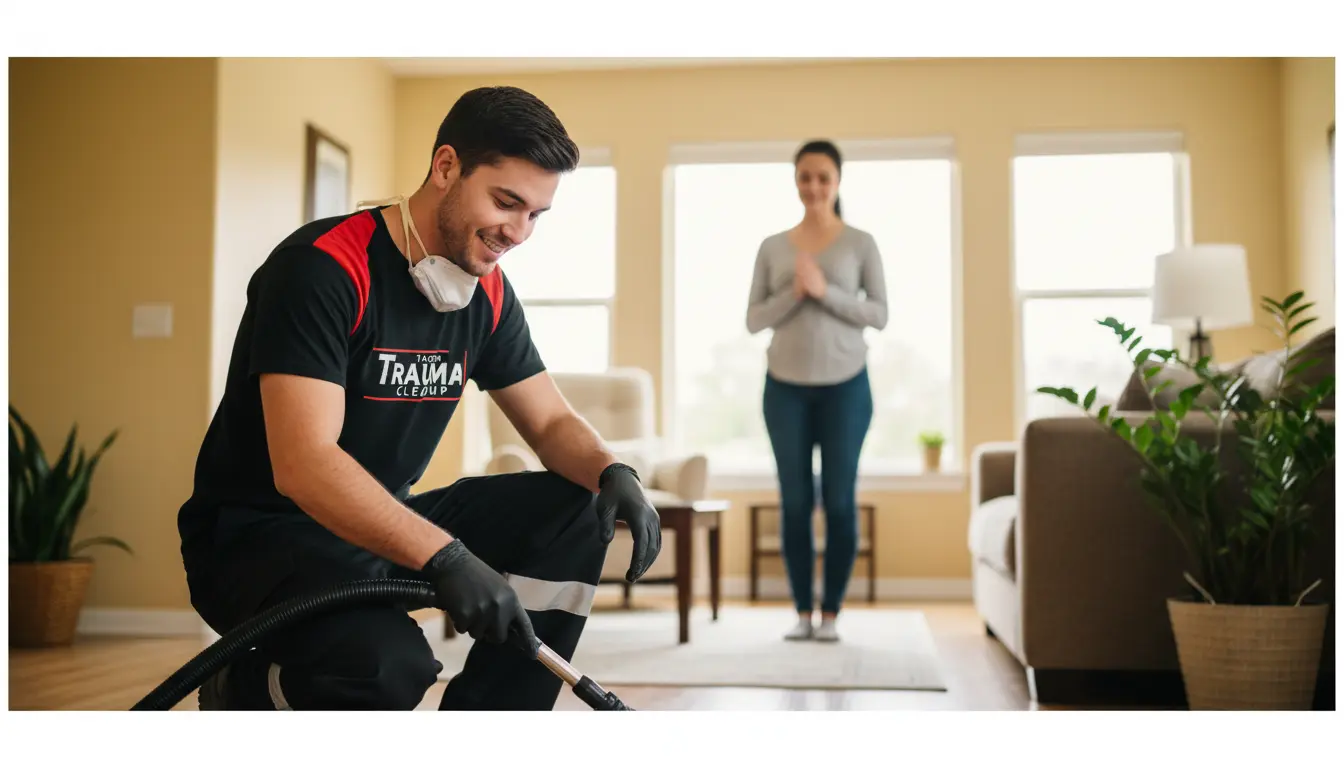
It was a drizzly morning in Tacoma, Washington, when Sarah, a local property manager, received a distressing call from one of her tenants. A deceased individual had been found in a rental unit, and the police were still processing the scene. As Sarah arrived at the property, she was met with an overwhelming stench of decomposition that seemed to permeate every corner of the building. The air was heavy with the smell, and she knew that she needed to act quickly to prevent further contamination and potential health risks to the other tenants. This scenario is all too common in the Pacific Northwest, where the damp climate can accelerate bacterial growth and exacerbate biohazard odors. Decomposition odors can spread through HVAC systems, posing a significant threat to indoor air quality and the health of occupants.
The situation highlighted the critical importance of professional trauma cleanup services in Tacoma and surrounding areas. Local residents and property managers like Sarah rely on experts who can discreetly and effectively remediate biohazardous situations, ensuring the safety and well-being of all individuals involved. In this context, understanding why decomposition odors can spread through HVAC systems is essential for preventing the proliferation of harmful pathogens and maintaining a healthy indoor environment.
The primary mechanism by which decomposition odors spread through HVAC systems involves the airborne transmission of volatile organic compounds (VOCs) and other gases emitted by decomposing biological materials. These compounds can be drawn into the HVAC system through vents, ducts, or other openings, allowing them to circulate throughout the building. Once inside the HVAC system, the VOCs can adhere to surfaces, be distributed through the air handling units, and eventually be released into other areas of the building, causing the odor to spread.
Understanding Decomposition Odors
Decomposition odors are a result of the breakdown of organic matter, which releases a mixture of gases, including VOCs, ammonia, and hydrogen sulfide. These gases are not only unpleasant but also potentially hazardous to human health, as they can cause respiratory issues, headaches, and other health problems. The spread of decomposition odors through HVAC systems can be particularly problematic in buildings with complex ventilation systems or those that are not properly maintained.
In Tacoma, the combination of a damp climate and the presence of older buildings with porous subflooring can exacerbate the issue of decomposition odors. The moisture-rich environment can facilitate the growth of bacteria and other microorganisms, leading to a more rapid breakdown of organic matter and the release of VOCs. Furthermore, the porous nature of older building materials can allow VOCs to penetrate deeper into the structure, making them more difficult to remove and increasing the risk of cross-contamination.
Importance of Professional Trauma Cleanup
Given the risks associated with decomposition odors and their potential to spread through HVAC systems, it is crucial to engage professional trauma cleanup services in the event of a biohazardous incident. These experts are trained to handle complex situations, utilizing specialized equipment and techniques to ensure the thorough removal of biological contaminants and the restoration of a safe and healthy environment. In Tacoma, services like Local Trauma Cleanup Experts Serving Tacoma and Surrounding Areas play a vital role in mitigating the effects of trauma and biohazard incidents.
Professional trauma cleanup involves a meticulous process that begins with an initial risk assessment to identify potential hazards and determine the most effective approach for remediation. This is followed by the establishment of control zones and containment measures to prevent cross-contamination and the spread of pathogens. The next steps involve the gross removal of biological materials, thorough sanitization, and deodorization, utilizing hospital-grade disinfectants and specialized equipment such as ozone generators and HEPA filtration systems.
Technical Process of Trauma Cleanup
The technical process of trauma cleanup is highly specialized and requires adherence to strict protocols and guidelines, including those set forth by OSHA, the EPA, and the American Bio Recovery Association (ABRA). Each step of the process, from initial assessment to final verification, is critical in ensuring that the environment is restored to a safe and healthy state. This includes the use of ATP (adenosine triphosphate) fluorescence testing to verify the efficacy of the cleanup process and ensure that all surfaces are free from biological contaminants.
In addition to the technical aspects of trauma cleanup, it is essential to consider the psychological and emotional impact of such incidents on individuals and communities. Services like 10 Tips for Quick Recovery after a Trauma Event in WA can provide valuable guidance and support during the recovery process, emphasizing the importance of seeking professional help and taking proactive steps towards healing and restoration.
Data Comparison
When considering the effectiveness of professional trauma cleanup versus standard janitorial or DIY cleaning methods, it becomes clear that the former offers a significantly higher level of safety, efficacy, and compliance with regulatory standards. The following comparison highlights key differences in pathogen eradication, structural penetration handling, and legal/disposal compliance.
| Feature/Metric | Professional Remediation | Standard/DIY Cleaning |
|---|---|---|
| Pathogen Eradication | 99.99% effective against a broad spectrum of pathogens | Variable efficacy, often leaving behind residual contaminants |
| Structural Penetration Handling | Specialized techniques and equipment to address deep-seated contaminants | Limited capability to handle complex structural penetrations |
| Legal/Disposal Compliance | Full compliance with OSHA, EPA, and local regulations for biohazard disposal | Potential for non-compliance, leading to legal and health risks |
Source: OSHA Bloodborne Pathogens Standard
Expert Insights
Experts in the field of trauma cleanup emphasize the necessity of thorough risk assessments, the establishment of isolation zones to prevent cross-contamination, and the importance of ATP testing to verify the efficacy of the cleanup process. Common mistakes made by property owners include the use of household bleach on blood, which can create toxic fumes and fails to penetrate porous surfaces, and ignoring the risk of fluid migration under baseboards, leading to structural rot and severe health hazards.
For those seeking to understand more about the process and importance of trauma cleanup, resources like What to Expect from Trauma Cleanup in Tacoma: A Complete Overview can provide comprehensive information and guidance. Additionally, Choosing the Best Trauma Cleanup Service Near Tacoma, WA offers valuable insights into selecting a reputable and reliable service provider.
Pricing and Cost Factors
The cost of professional trauma cleanup services can vary based on several factors, including the size of the affected area, the level of contamination, the need for specialized equipment, and the requirements for regulated medical waste disposal. While it may be tempting to opt for DIY cleaning methods to save costs, the risks associated with improper cleanup, including legal liabilities and health hazards, far outweigh any potential savings. Professional services typically operate on an hourly rate plus disposal fees, with tiered pricing based on the hazard level of the incident.
Safety and Standards
Safety is paramount in the context of trauma cleanup, with service providers adhering to strict safety protocols, including the use of personal protective equipment (PPE) and EPA-registered hospital-grade disinfectants. Compliance with OSHA 29 CFR 1910.1030, EPA regulations, and ABRA standards is not only mandatory but also crucial for ensuring that the cleanup process is conducted in a manner that protects both the individuals involved and the environment.
FAQs
What is the difference between trauma cleanup and standard cleaning services?
Trauma cleanup involves the specialized removal and disposal of biological contaminants, adherence to strict safety protocols, and compliance with regulatory standards. Standard cleaning services, on the other hand, are not equipped to handle the unique challenges and risks associated with biohazardous incidents.
How long does the trauma cleanup process typically take?
The duration of the trauma cleanup process can vary significantly depending on the size of the affected area, the level of contamination, and the complexity of the cleanup requirements. While some incidents may be resolved within a few hours, others can take several days or even weeks to fully remediate.
Is it safe to stay in a building where a traumatic incident has occurred but has not been professionally cleaned?
No, it is not safe to stay in a building where a traumatic incident has occurred without proper cleanup and verification that the environment is free from biological contaminants. The risks of exposure to pathogens, including bloodborne pathogens like HIV and hepatitis, are significant, and can lead to serious health consequences.
Can I use household cleaning products to clean up after a traumatic incident?
No, household cleaning products are not suitable for cleaning up after a traumatic incident. These products do not have the necessary efficacy against a broad spectrum of pathogens and can even exacerbate the situation by spreading contaminants or creating harmful chemical reactions.
Conclusion
In conclusion, the spread of decomposition odors through HVAC systems poses a significant risk to indoor air quality and the health of occupants. Understanding the reasons behind this phenomenon and the importance of professional trauma cleanup services is crucial for mitigating these risks. By engaging reputable and reliable service providers, individuals can ensure that their properties are restored to a safe and healthy state, protecting the well-being of all who inhabit them. For those in need of professional trauma cleanup services in Tacoma and surrounding areas, Washington Biohazard Response stands as a trusted and discreet partner, committed to providing compassionate and scientifically rigorous solutions to biohazardous incidents.
Ultimately, the decision to invest in professional trauma cleanup is not just a practical consideration but a critical step towards ensuring the health, safety, and well-being of individuals and communities. By prioritizing this investment, property owners and managers can safeguard against the potential risks and consequences of improper cleanup, creating a safer and more resilient environment for everyone.